WHAT'S THIS ALL ABOUT?
This is Austin’s first public mural — and a portal to the past.
First painted in 1974, the 23rd Street Mural is packed with people, places and strange little details. We turned it into an interactive documentary website to bring these hippie hieroglyphics to life.
Scroll around and click what catches your eye. Characters, armadillos and peyote buds open into 15 original short films.
There’s no beginning. No end. Just rabbit holes. The longer you wander, the bigger the picture becomes — a tapestry of people, music and mischief that made Austin, Texas.
Watch the intro. Then start exploring.


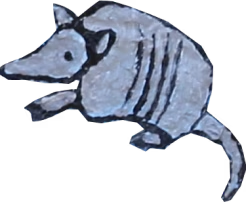
It was inevitable armadillos would end up dead center on the mural. For the past few years, Jim Franklin, through sheer passion, perseverance and his own peculiarities, had brought the lowly armadillo up into the Austin zeitgeist. He painted them, kept live ones as models and dressed up like one - but it all started when he put a joint in an armadillo’s mouth. No, not literally, artistically.

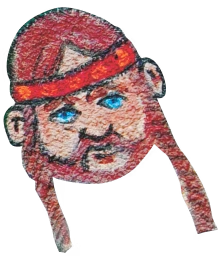
Created by Gilbert Shelton, Oat Willie was his comic book character with a rallying cry of “Onward thru the fog.” In 1968 Gilbert entered him as a write-in candidate for Texas Governor. Supporters of Oat Willie's campaign often met at a local head shop Underground City Hall aka Campaign Headquarters. Unfortunately, Oat Willie lost the race but won the hearts of Austin’s anti-establishment. Maybe Oat Willie even inspired Crazy Carl’s multiple runs for City Council and Kinky Friedman’s Governor campaigns which were soon to come.
Doug Brown and George Majewski bought the Underground City Hall and changed the name to Oat Willie's: Campaign Headquarters.
Spencer Perskin’s band sits at the head of the river of the entire Austin music scene. Shiva’s Headband played opening night at the Vulcan Gas Company AND the Armadillo World HQ. His band not only introduced the psychedelic scene to Austin he made these clubs a must-play venue for all touring bands. So everyone played Austin. Which gave Austin a front row seat to the biggest names in folk, rock, country and especially the blues. Like one of Spencer’s live 18 minute fiddle-forward acid fueled songs that swirled the audience into a frenzy the town became a musical petri dish out of which so many formidable bands formed. And thanks to The Vulcan, they had a place to play.


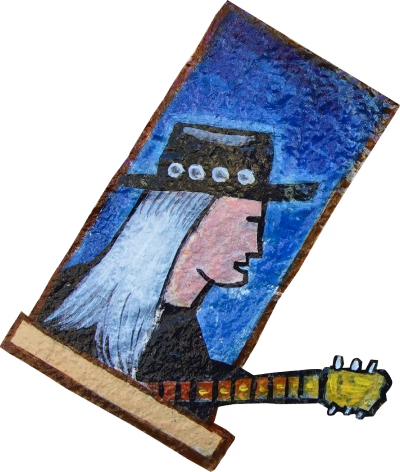
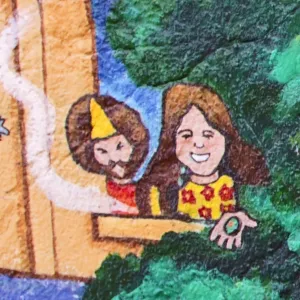
Of course Johnny is peeking out the window of the Vulcan Gas Company because it was here in 1968 he recorded his first album: The Progressive Blues Experiment. Because of this ground-shaking debut, his striking looks and virtuosity on the guitar, Johnny was quickly ‘discovered’ at the Fillmore East, signed to the biggest advance in music history and within a year was on stage at Woodstock (backed by Austin bassist Tommy Shannon). So, he had been to the mountaintop by the time he settled into regular gigs at the Vulcan in podunk Austin, TX.
With the Vulcan as the venue and Johnny as a draw, every blues icon of the day made it a point to stop and jam in Austin. Muddy, Hooker, BB, Albert. Howlin’, Mance and Freddie. What a scene. Mutual respect grew between these artists and the city of Austin in no small part because Johnny continued to produce new albums for many of these blues superstars. After the Vulcan closed, they played the Armadillo. After the Armadillo shuttered, they played Antone’s. And that was where another young white blues guitar player got to riff alongside the greats like Albert King. Stevie Ray Vaughan’s reinterpretation of the blues, and subsequent fame, only could have happened thanks to the foundational groove Johnny Winter laid down before him. Thanks Johnny.

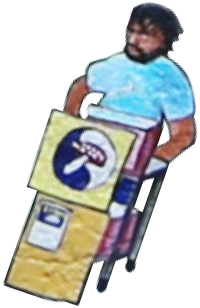
Hey, Cupcake. Torchy’s. East Side Kings. Odd Duck. Via 313. Gourdoughs (above to the right). Oh, and Franklins BBQ. In a town where taking a restaurant concept from food truck, to brick-and-mortar, to nationwide franchise is a proven model it’s hard to imagine a time when selling food on the street would get you locked up. Actually arrested. So who do we have to thank for keeping Aaron Franklin out of the pokie and behind the pits? That distinction falls on the shoulders of UT law school student - Roland DeNoile - who saw a hungry niche of students a long walk from the Texas Union’s greasy cheeseburgers. They needed salvation. They needed Salvation Sandwiches.

After winning the Austin Chronicle’s Best Photographer category 10 years in a row, they just canceled it, because there was never a doubt Alan Pogue would keep on winning it. His documentation of the city's cultural and political life over the last 50 years is unmatched and unrelenting. He shot every iconic institution in town as it was becoming an iconic institution: The Drag, The Armadillo, Les Amis, Liberty Lunch, Esther’s Follies and every fool that sauntered through City Hall. So inevitable he was there, on campus, in the rain, shutter clicking to capture a random moment as it became magic.
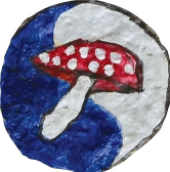
Running a comic-book character for governor (Oat Willie). Throwing a party for Winnie the Pooh’s perpetually glum companion (Eeyore’s Birthday). Spamarama. Big ideas like these don’t come from a six-pack of Lone Star. You need imagination, endurance and the ability to suck clouds into your fingertips. Enter peyote. Lots of peyote.
In this film, we travel through the fog to find the earliest heartbeat of Austin’s weird soul.
Much of it centered on The Ghetto — a place where Austin’s emerging counterculture
gathered. The Ghetto lives on in comics and stories but, for the life of us, we couldn’t
find a single photograph.
If you’ve got one, please share it. We’d love to see where it all began.
NOTE: There are also no known photographs of the house where a truckload of peyote was boiled down to extract mescaline. Hence the original illustrations in this film by Kerry Awn.
We could only make this film thanks to a generous donation from Clay Imports. They also helped us interview Don Hyde in Mexico. And paid for the post interview beers and mezcal with Don.

For decades Austin provided musicians the grooviest paradise to play. Cheap rent, killer venues and a fervid audience kept the party rolling. But most importantly, Austin gave musicians space. They were thousands of miles from the nearest record company, living totally under the radar and playing all the time (on stage and off). This space allowed them the creative latitude to find their voice and not follow the formula. It happened again and again with Roky, Johnny, Doug, SRV and the biggest of them all, Willie. Austin gave Willie Nelson the space to transform from another Nashville songwriter to WILLIE! – one name superstar. And that transition happened in Austin with the recording of a single song.
Outside of Chicago you’d be hard pressed to find a town as supportive of the blues as Austin TX. From the Vulcan Gas Company to the Ritz to the Armadillo World Headquarters to Antone’s there was always a place for the biggest names in blues to perform. Jimmy and Lil’ Stevie Vaughan grew up in these clubs watching these icons play and then took what they learned to a myriad of bands they fronted over the years. Then the pieces clicked into place for Stevie, lightning struck, the clouds parted and the entire world got to see what had been cooking on the small stages of Austin, TX.
His bandmates Tommy Shannon and Chris Layton tell us what it was like to catch the biggest ride of them all.
Did you know the 23rd St. Mural has been updated five times over the past 50 years? It has grown just like our city. Kerry, Rick and Tommy keep adding people, places and new landmarks each time they paint. During the 2014 renovation the artists ‘folded back’ the upper left corner of the mural to ‘reveal’ South Congress. SoCo wasn’t on Austin’s cultural map back in the 70’s. Unless you were looking for hard drugs, prostitutes or flop houses!
They included Matt’s El Rancho, Broken Spoke, Sandy’s and even the Greetings From Austin mural from South 1st and Annie St. So meta! The Continental Club stands on the shoulders of all the great venues that have come before. It is the cornerstone of South Congress and a mecca for music lovers. To this day you can step through the doors and experience ‘old’ Austin in its most perfect form.
We could only make this film thanks to a generous donation from the Hahn Agency, a local, independent ad agency and integral part of the creative culture of Austin.

Johnny Depp made the Continental his club when he was in town filming Who’s Eating Gilbert Grape back in the early 90’s. When he returned to LA he lamented there was no music joint with the vibe or band list like the Continental Club. So, he opened The Viper Room.

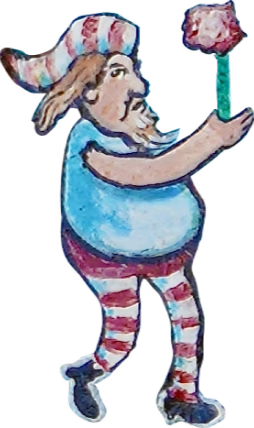
For 40 years Crazy Carl spun a flower in front of Esther’s Follies on 6th Street. And if you could distill the special sauce of Austin into one wild man-boob making individual it would have to be Crazy Carl Hickerson. He lived across the street from the Beef and Pie studio. After many afternoons of watching him load buckets of fresh chrysanthemums and wheel his life partner Charlotte into the back of his decoupaged van we knew something special was happening.
We made a film about him: Crazy Carl and his Man-Boobs: An Austin Love Story. As we tell his story — from flower salesman to street performer to perennial candidate for city council – we tell the story of Austin. It’s different than all the shorts on this site (this is a 50 minute documentary) but it’s the reason we started the mural project in the first place. Now before this gets too meta, let’s get on with the show and say thanks Carl, this is one more wild thing you set in motion.

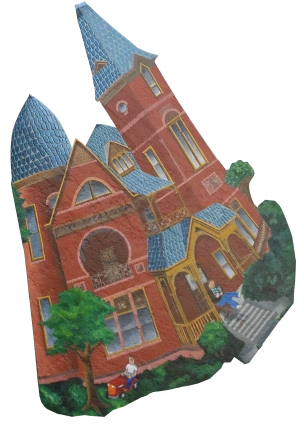
Finished in 1887, the Butler Mansion utilized both Butler bricks and Marble Falls granite that had been shipped in at the same time for the State Capitol. The mansion's unique design featured rooms laid out only in unconventional geometric shapes, with two octagons and absolutely no rectangle or square spaces.It presided over the corner of 11th and Guadeloupe until 1971 when Louis Marks of Houston bought it and demolished it for a parking lot. It was already gone when the mural was first being painted in 1973.
This was the home of Michael and Mary Butler, founders of the Butler Brick Company. Butler Bricks were the building blocks of Austin. Warehouses, homes and hotels were all built with their innovative product. Made from the clay fields that formed on the banks of the Colorado River these bricks were used in UT’s Old Main Building, and over 300,000 are a part of the Texas State Capitol.


You can still find Butler bricks all over Austin and you can touch a piece of architectural history at the Zilker Botanical Garden. A window from the Butler Mansion sits amongst the local trees and wildflowers.

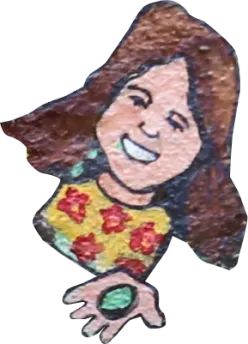
Big Rikke was the heart and soul of Austin in the 1970’s. Crowned the Guacamole Queen for her early adoption of the avocado in all its glorious ways; she was the clip that held the joint of Austin together. Frank Zappa and Doug Sahm penned songs in her honor. Anyone who every ate the famous nachos at Armadillo World Headquarters have her to thank. She may not be a famous as the people she fed but was as integral to the scene as any of them. We knew she held a place in people’s hearts, because every time we mentioned the name Big Rikke during an interview it brought a big smile. Then a knowing chuckle. Then a disclaimer about not being able to tell the whole story!
This film was made possible by the generous support of Planet K — a true Austin original. Support local. Support the businesses that support creativity.


If you are standing in front of the mural look over your right shoulder. Do you see that church? Below it, down those stairs a miracle happened in the early 70’s. Idealistic doctors, nurses and a lot of volunteers provided ‘free’ health care for the uninsured people of Austin. And there were a lot of them. This was very much the attitude of the times: the old ways aren’t working – we can find our own way. And this was very much the case for health care and women’s health in particular. The care they provided grew and grew and grew. The People’s Free Clinic has become People’s Community Clinic a thriving medical facility that provides heath care for over 20,000 underserved Austinites every year. A miracle indeed.
The icon from the mural that connects us to this story is The Smile Guy. He was a fixture on the Drag shouting Smile! Smile! And collecting money for the People’s Free Clinic in a yellow bucket. While the Smile Guy is long gone you can put a smile on a lot of people’s faces by donating some change in his name to the current PCC.
Donate Here.

This film was made possible by the generous support of Planet K — a true Austin original. Support local. Support the businesses that support creativity.


You’ve heard there’s a party at one in Dazed and Confused. You’ve driven past them. Maybe you’ve even stood underneath one and wondered: where the hell did these come from? The answer goes back further than you might think.
Austin, Texas. 1885. Under cover of darkness, someone is brutally attacking servant girls, wives and women across the city. A string of gruesome murders sends Austin into a panic. The hunt is on for a killer who is never caught.
Today, more than 140 years later, you can look up and see what happened next.
Narrated by Texas Monthly’s Skip Hollandsworth, author of The Midnight Assassin, A Moon Tower Mystery shines a light on one of America’s earliest serial murder cases.
Original score by The Octopus Project.
We can’t keep making these films without your help.
Your donation helps fund more original films for the 23rd Street Mural Project and keeps the site free for everyone.
All donations are tax-deductible through our fiscal sponsor, Future Front Texas.


Future Front is a fiscal sponsor of The 23rd Street Mural Project.
If you or your company would like to sponsor a film. Please email michelle@beefandpie.com


This project is supported in part by an Elevate Grant of Austin Arts, Culture, Music and Entertainment.


Beef and Pie Productions is an independent, full-service, video production company founded in Austin, TX in 2001. They filmed, edited and wrote all the content you’ll find on this site. They didn’t even attempt to verify the memories of their sources, and certainly didn’t fact check their audacious claims that they single-handedly started the AWHQ. (Yes, everyone started the AWHQ). Although sometimes they did question the plausibility of their interviewees ability to alter time and space itself. But they didn’t press them, they just laughed, wafted the weed out of studio and printed the legend.

The Graphic Standard is an award-winning design studio specializing in bespoke branding and digital experiences that elevate brands and drive business.
MURAL ARTISTS
Kerry Awn, Rick Turner, Tommy Bee
BEEF & PIE PRODUCTIONS
Writer/Director: Mike Woolf
Producer: Michelle Crosby
Editor: Landon Peterson
Camera: Andrew Yates, Josh Verduzco, Amy Smith
Audio: Chris Erlon Digital Domain
Drone: Vinnie Fallico
THE GRAPHIC STANDARD
Gray Luckett, Shane Bzdok, John Norton

Walter Falk was a grad student at UT working toward his Ph.D. when his advisor lost his dissertation. What did Walter do? He crossed Guadalupe Street and started selling his watercolors on the Drag — then stayed for decades.
An original Drag vendor and champion of Austin street artists, he helped create the 23rd Street People’s Renaissance Market. He also helped turn Eeyore’s Birthday Party into an Austin institution and emceed the event for years.
By the time he died in 2007, he had sold nearly 40,000 original works.

Printed after hours in the Texas State Capitol basement, God Nose is widely considered the first underground comic book. It was 1964 when Austin artist Jack “JAXON” Jackson drew a 42-page comic featuring a long-nosed God arguing about religion, racism, birth control and the rapidly changing world around him. Friends helped him run off 1,000 illicit copies, which he sold around Austin and the UT campus. Only God knew what he’d started.
By 1969, JAXON was in San Francisco with fellow Texans Gilbert Shelton, Fred Todd and Dave Moriaty. Together they bought an old printing press and started Rip Off Press, convinced that if they owned the means of production they could rule the world.
They didn’t quite manage that. But Rip Off Press became one of the essential publishers of underground comix, printing work by R. Crumb and helping send Gilbert Shelton’s Fabulous Furry Freak Brothers out into the world. JAXON never stopped creating. He eventually turned his obsessive attention to Texas history, creating meticulously researched graphic histories about Native Americans, Tejanos, the Alamo and the bloody formation of Texas.
His 1979 Comanche Moon, about Cynthia Ann and Quanah Parker, is a hell of a place to start.

JAXON passed in 2006. Here is a rare video of him talking about his work.
As LBJ famously put it at the dedication of his library, "It is all here: the story of our time—with the bark off.” And in Austin, on that day, that tree was raw. LBJ had only been out of office two years, the Vietnam War was raging, as were the protests across the country and especially at UT. So when the entire leadership of the US Government descended on Austin there was no question the anti-establishment would have something to say. Here are two shorts films that, together, capture the dichotomy of the day.

May 1971
An Encounter with History:
Dedication of the LBJ Library.
Watch the film

May 1971
Witches Hex LBJ Library
Watch the film
RICK: “No one knew his name, he just stood in front of the Co-op and shouted ''Smile! Smile!” All day long. It was with a weird mixture of good cheer and menace.”
The Smile Guy collected change for the People’s Free Clinic. When the free clinic opened in 1970 it was a big deal. If you are standing in front of the mural look over your right shoulder, you’ll see the church basement where it began. This is where anyone could get free medical care and (very importantly at the time) birth control. You might have to wait in line for hours but where else could low-income, uninsured Austinites turn for their medical needs? This meant everything to the burgeoning artist, musician, and creative community because it was another example of them not having to rely on society’s infrastructure.
In 1974, the People’s Free Clinic changed its name to People’s Community Clinic. “It wasn’t supposed to be ‘free’ as in “don’t pay,” original volunteer Alicia Jarry says. “It was supposed to be “free” as in free from the establishment, free love, etc.”
The clinic is now a proven model for medical care, a true safety net for the area’s uninsured and medically underserved. What started with a handful of idealist doctors and nurses donating their time, has grown to serve 20,000 people a year with a $26.3 million annual budget. Today PCC is housed in two main buildings: The People’s Center for Women’s Health off of Interstate 35 across from St. David’s Medical Center and the main People’s Community Clinic run a much bigger facility at Interstate 35 and U.S. 290. They celebrated their 50th anniversary right in the midst of the Covid 19 pandemic.
You can put a smile on a lot of faces by donating some change in his name to the current PCC.
Donate Now
The Elisabet Ney Museum has to be considered the first art studio built in Texas. It was completed in 1893 and was where Elisabet Ney worked, lived and entertained until her death in 1907. Before building her little castle in the suburbs of Austin, Elisabet had already pioneered a trailblazing career in Europe. She was the first female sculpture student to study at the Munich Academy of Art. Her clear craftsmanship and personal charm earned sittings with the highest levels of society. Philosopher Arthur Schopenhauer, Deputy of the Kingdom of Italy, Guiseppe Garibaldi and the last king of Hanover all sat with her to sculpt portraits.
Outspoken, unconventional, and iconoclastic, Elisabet is Austin’s first cultural outlaw. Soon upon her arrival she was in demand socially and artistically. During the hot days of summer she would work on busts of Sam Houston or Lady MacBeth and, in the cooler evenings, host dinners on the shores of her little lake she created by building a dam on Waller Creek. Art inspires art. Her full length sculpture of Stephen F Austin was the inspiration for the focal point of the 23rd Street Mural.

Elisabet’s sculptures of Stephen F Austin and Sam Houston are on display in the rotunda of the State Capitol, her Lady MacBeth is at the Smithsonian, and her full length of King Ludwig can be seen at her museum in Hyde Park, open weekdays 10-5.


This historic brick church shares a unique kinship with the Texas State Capitol. When the Capitol burned to the ground in 1881 anything that could be saved was piled into a small hill of rubble at the head of Congress Avenue. Much of the brick, limestone, and timber that the Gethsemane Lutheran Church is built from was salvaged by congregation members – with wheelbarrows – in 1882.


They worshiped there until 1961 when they moved north and the State of Texas bought the church. It was renovated, restored and since 1970 has been home to the Texas Historical Commission – the agency dedicated to preservation throughout the state of Texas. The church now provides sanctuary to the entire THC Library.

Hank was added during the 2002 renovation.
RICK: We did this whole mural as an ode to the counterculture that we were a part of. It was a bunch of in jokes. As that counterculture got embraced and began to be assimilated, the imagery we added during subsequent renovations was more mainstream. We went from Roky to Hank Hill. He was a good addition.
TOMMY: Mike Judge is from Austin.
KERRY: And Hank is easy to paint.
Former governor of Texas.
When Kerry Awn, Rick Turner and Tommy Bee first painted the mural in 1974, they included a naked guy running through it. Why? Because streaking was a thing. And they thought it was funny.
Then Austin gave them a better story. In 1999, after a UT football win and a very long weekend, Matthew McConaughey was arrested at his Austin home — naked, with a set of bongos across his lap.
When the mural was renovated in 2002, the streaker got an upgrade. As Rick Turner explains: “Anybody that can get arrested naked with a bong and bongo drum deserves recognition.”
We’ve heard the legend. Now we want the source. Matthew, come tell us the story yourself. Know Matthew? Send him our way.
Rick: Oh we just wanted to load that up with meaning. First there had to be some violet in the crown because we live in the Violet Crown. As many jewels we could fit. And the six flags over Texas: Spain, France. Mexico. The Confederacy. The Republic of Texas and the USA.
Four times over the past 50 years the mural has been repainted, and updated, with characters, new skyscrapers, and tie-fighters. It has faded, been tagged and most recently the wall underneath began to crumble. Each renovation the artists give it a fresh coat and decide who to add. This has become an informal way of honoring people who have passed but played a significant role in shaping the culture of Austin. Recent additions include artist Micael Priest, who painted some of the mural itself, Ann Richards, Lady Bird Johnson, Henry Gonzales, and the Hawaiian Prince Jimmy Hughes.
KERRY: We thought it might last maybe five or 10 years. With Austin changing so much it's like, why keep this hippie mural up here?
RICK: I'm glad it has stayed, and we can keep bringing art to the people.”
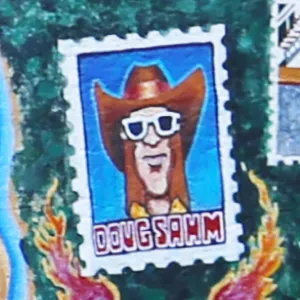

While less famous than Willie, Stevie or Johnny Winter, Doug was more responsible for creating the Austin music scene than any of them. He was on stage all the time, all over town. He was Austin’s house band. As a non-stop ‘groover’ he dubbed the town Groover’s Paradise and recorded this love letter to Austin at the same time the 23rd St. Mural was being painted. Artist Kerry Awn also illustrated the album cover. Groover’s Paradise is the soundtrack to The 23rd Street Project.
We are currently looking for sponsors to make this film. If you are interested, please contact us.

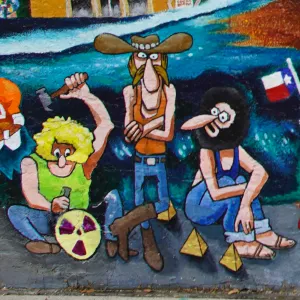

In late-1960s Austin, UT student Gilbert Shelton created three stoned antiheroes who didn’t trust the government, didn’t want jobs and definitely weren’t buying the American Dream.
The Fabulous Furry Freak Brothers first appeared in Austin’s underground newspaper The Rag, where their adventures with drugs, cops, landlords, politics and general irresponsibility fit the times perfectly. They didn’t just make fun of the counterculture. They came directly out of it. What started in Austin escaped quickly. The Freak Brothers became one of the defining underground comics of the era, read around the world and surviving long after most of the culture they were mocking has disappeared.
More than 50 years later, Fat Freddy, Freewheelin’ Franklin and Phineas are still around — most recently resurrected as an animated television series.But before all that, they were three freaks born in Austin.
We are currently looking for sponsors to make this film. If you are interested, please contact us.
Printed after hours in the Texas State Capitol basement, God Nose is widely considered the first underground comic book. It was 1964 when Austin artist Jack “JAXON” Jackson drew a 42-page comic featuring a long-nosed God arguing about religion, racism, birth control and the rapidly changing world around him. Friends helped him run off 1,000 illicit copies, which he sold around Austin and the UT campus. Only God knew what he’d started.
By 1969, JAXON was in San Francisco with fellow Texans Gilbert Shelton, Fred Todd and Dave Moriaty. Together they bought an old printing press and started Rip Off Press, convinced that if they owned the means of production they could rule the world.
They didn’t quite manage that. But Rip Off Press became one of the essential publishers of underground comix, printing work by R. Crumb and helping send Gilbert Shelton’s Fabulous Furry Freak Brothers out into the world. JAXON never stopped creating. He eventually turned his obsessive attention to Texas history, creating meticulously researched graphic histories about Native Americans, Tejanos, the Alamo and the bloody formation of Texas.
His 1979 Comanche Moon, about Cynthia Ann and Quanah Parker, is a hell of a place to start.
We are currently looking for sponsors to make this film. If you are interested, please contact us.

One of the most consequential Supreme Court decisions in American history didn’t start in DC or even a courtroom. It began in Austin, Texas, with a scrappy group of women working at The Rag, the city’s first underground newspaper. They supported the young women of Austin by sharing resources, building an underground network, and taking on a system designed to silence them. From that tiny office, they launched a legal battle that would travel to Dallas, then to the Supreme Court, and ultimately reshape the nation. This was not a top-down political movement—it was a grassroots uprising that began right here. And it worked.
We are currently looking for sponsors to make this film. If you are interested, please contact us.
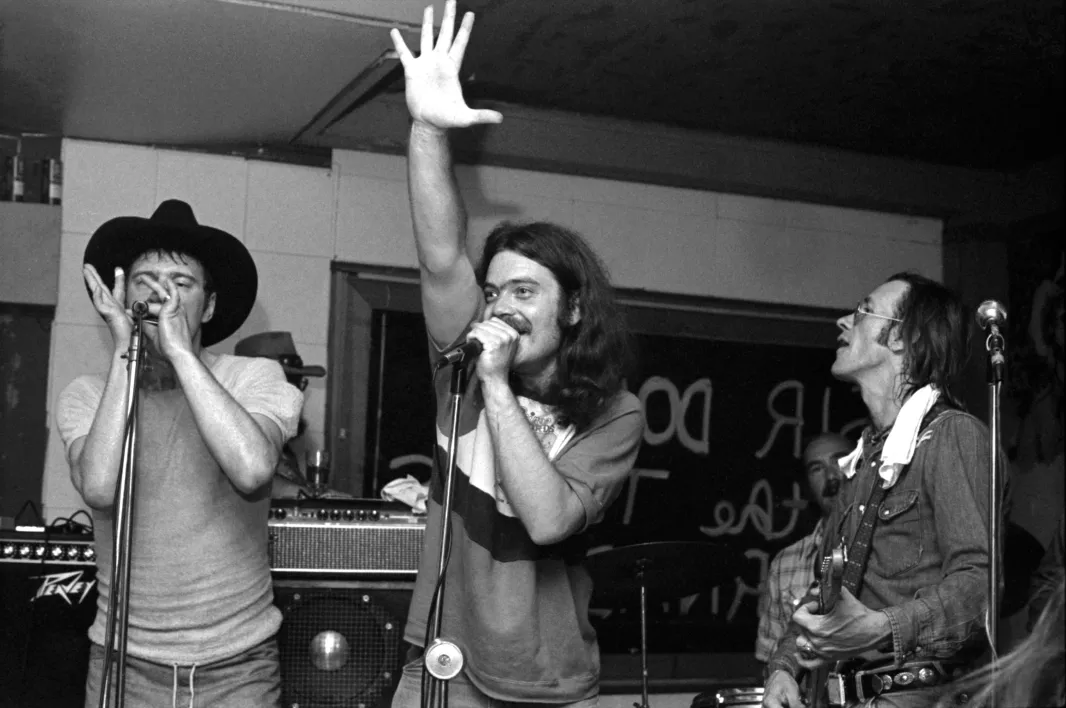
Before there was an Austin sound there was Roky Erickson. His raw, unfiltered sound, and that unmistakable, otherworldly voice captivated and inspired a generation. He traded songs with Janis Joplin, shared the stage with Doug Sahm and when his band took the stage on the second weekend of the Vulcan Gas Company, he lit the fuse that ignited the city’s music scene.
We are currently looking for sponsors to make this film. If you are interested, please contact us.

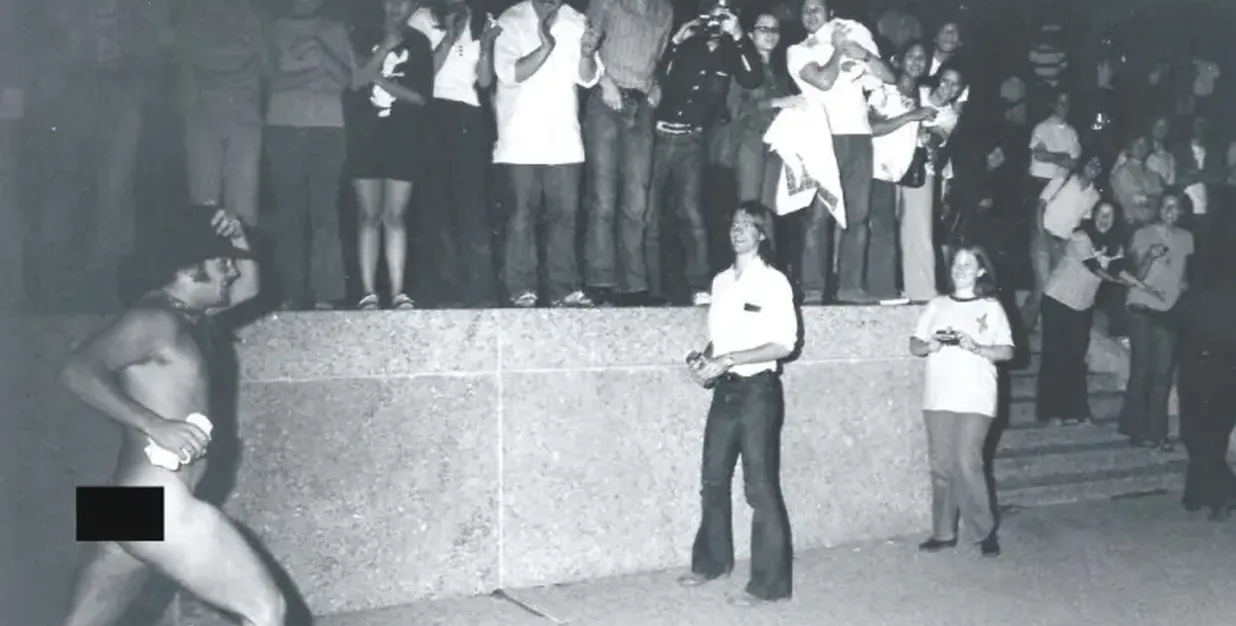
When Kerry Awn, Rick Turner and Tommy Bee first painted the mural in 1974, they included a naked guy running through it. Why? Because streaking was a thing. And they thought it was funny.Then Austin gave them a better story. In 1999, after a UT football win and a very long weekend, Matthew McConaughey was arrested at his Austin home — naked, with a set of bongos across his lap.When the mural was renovated in 2002, the streaker got an upgrade. As Rick Turner explains: “Anybody that can get arrested naked with a bong and bongo drum deserves recognition.”
We’ve heard the legend. Now we want the source. Matthew, come tell us the story yourself. Know Matthew? Send him our way.
We are currently looking for sponsors to make this film. If you are interested, please contact us.
A lot of the films on the mural celebrate beginnings. This one focuses on what brought down Austin’s first original music venue, giving our virtual mural a bit more depth and color. There was something special happening at the Vulcan – hundreds of kids were showing up to hear live music and they didn’t even serve alcohol at the time. Sure, they were all on psychedelics but the authorities couldn’t figure that out – so they set out to stop it. The joke was there were often more cops, narcotic agents, and CIA in the Vulcan than patrons. The final straw was when the owner, Don Hyde, caught wind that they were gonna plant a brick of weed in his office and put him away for decades. Don left town and the Vulcan’s days were numbered.
We are currently looking for sponsors to make this film. If you are interested, please contact us.